• Skip to main content
  • Skip to footer

Immigration Law of Montana

Christopher J. Flann, Attorney

406-373-9828
  • Make an Appointment
  • Client Log In
  • Home

Immigration Law of Montana

  • About
    • How to Read Immigration Lawyer Reviews
    • Christopher Flann, Attorney
    • Collette Layton, Legal Assistant
    • Rockwell “Rock” Hinkle, Legal Assistant
    • ILM Scholarships
    • Reviews and Testimonials
    • Gabriela Veroes Legal Assistant
    • Maryangel Aguilera Legal Assistant
    • Fidel Villegas, Legal Assistant
    • Gabriel Chávez, Legal Assistant
    • Erwin Noguera, Legal Assistant
  • US Citizenship
    • Form N-648 Medical Disability Exception
    • Age-Based English Waivers
    • N-600 vs Passport for Citizenship Proof
    • INA 320 — Automatic Citizenship
    • Stepchild Adoption and Citizenship
    • Citizenship through Adoption
    • Citizenship through Naturalization
    • Citizenship through Military
    • Derivative US Citizenship
    • N-600K — Citizenship Through a Grandparent
    • INA 301 & 309 — Citizenship at Birth Abroad
  • Green Cards
    • I-130 Separate Petitions for LPRs
    • Income Requirements with Stepchildren
    • AOS with 10-Year Bar (212(d)(3))
    • I-751 Waiver After Divorce
    • Refugee Travel Document Expired
    • Protecting Asylum / SIJS Benefits
    • Asylee Adjustment: INA 209 vs 245
    • NVC Document Roadblocks
    • 221(g) Refusal Explained
    • F-2B Election (Parent Naturalizes)
    • VAWA for Cuban Adjustment Act Derivatives
    • Lying on Form I-485
    • Adjustment of Status: Getting Your Green Card Without Leaving the United States
    • Asylee Green Card
    • Conditional Green Card Renewal
    • Employment Based Green Card
    • I-140 Ability to Pay
    • Consular Processing
    • Family Based Green Card
    • Green Card for Religious Worker
    • Green Card through Marriage
    • Green Card through Refugee or Asylee Status
    • Parole in Place for Military Families:How It Works, Who Qualifies, and What It Actually Does
    • Green Card Renewal: Complete I-90 Guide | Immigration Law of Montana
    • Humanitarian Green Card
    • Refugee Green Card
    • Sheepherder Green Card
    • Marrying an Illegal Immigrant
    • For American Indians Born in Canada
    • Special Immigrant Visa
    • When Your LPR Spouse Dies
    • When Your USC Spouse Dies
    • Derivative Beneficiaries When Petitioners Die
  • Structuring Immigration Information on a Website
    • Lying on Immigration Forms
    • PERM: Education + Experience
    • The EB-4 Visa Problem
    • Rights of Filipino Teachers and Workers
    • Canadian Immigration Pathways
    • Immigration for Employers
    • EB-5 Investor Visa Guide | Immigration Law of Montana
    • Immigration for Farmers and Ranchers
    • Immigration for Religious Organizations
    • Farm Worker Green Cards
  • US Visas
    • J-1 Exchange Visitor Visa
      • J-1 Intern & Trainee Year
      • J-1 Summer Work Travel
      • J-1 Au Pair Program
      • J-1 Two-Year Home-Residency Rule
      • J-1 Waivers
      • J-1 Advisory Opinion
      • After Your J-1 Year
      • J-1 or F-1 for Married Students
    • B-1 for Religious Work
    • Performer Visa Requirements
    • Options After Parole Termination
    • Asylum: Complete Application Guide
    • Asylum for Visa Waiver Program Entrants
    • F-1 & OPT
      • STEM OPT Extension Guide
      • OPT Guide for F-1 Students
      • B-1/B-2 to F-1 Change of Status
    • E-Series Visas
      • E-3 Job Ended: Your Options
      • E-2 Business Changes
      • E-2 Visa for Canadians
      • E-1 Visa for Treaty Traders
      • E-2 Visa for Treaty Investors
        • The E-2 Active-Investment Standard
      • E-3 Visa for Australian Professionals
    • H-1B Repayment Agreements
    • TN Catch-All Categories
    • The B-2 Visitor Visa: A Practical Guide
    • B-1 Visa for Business Visitors
    • H-1B Visa for Specialty Occupation Workers
      • H-1B Visa Lottery
      • H-1B for School Districts
      • H-1B Cap-Gap & OPT
    • H-2A Program
      • DUI and the H-2A Visa
      • Canadian Custom Combine Crews (H-2A)
      • H-2A Mobile Housing
      • H-2A Workers Staying Longer
      • Becoming an H-2A Labor Contractor
      • H-2A Seasonality Requirements
    • H-2B Visa Guide: Cap, Lottery, and Temporary Need
    • H-3 Visa for Trainees and Special Education Visitors
    • K-1 Visa
      • K-1 and Expedited Removal
      • K-1 Meeting Waiver
      • K-1 with Criminal Record
    • K-3 Spouse Visa
    • O-1 Visa for Artists, Scientists, Educators, Businesspeople and Athletes
    • P-3 Visa: A Guide to Culturally Unique Programs
    • R-1 Visa for Religious Workers
    • R-1 Five-Year Limit: Recapturing Time
    • TN Visa: Work Authorization Under USMCA
    • U Visa for Crime Victims: What It Takes and What to Expect
    • Change of Nonimmigrant Status
    • Form I-539: Extension and Change of Nonimmigrant Status
    • Process for US Visa Application Through Admission and Stay
    • Entry into United States
    • I-94 Admission Record: What Controls Your Stay
    • Volunteer Visa USA
    • Humanitarian Parole: Programs, Termination & Options
    • Leaving the United States
  • Immigration Services
    • Premium Processing Eligibility
    • How to Withdraw a Pending USCIS Application
    • RFE Response Help in Montana: When Immigration Requests Can Be Fixed (And When They Can’t)
    • Apostille Services
    • Document Translation Services
    • Picked Up by ICE in Montana: What to Do, Where They Will Be Held, and What Comes Next
    • Why A Strategy Consultation
  • Removal Defense
    • Removal Proceedings Overview
    • Picked Up by ICE in Montana
    • Detention & Bond Hearings
    • Get Your Immigration Court Records
    • Criminal Records & Immigration Status
    • Cancellation of Removal
      • Non-LPR Cancellation
      • VAWA Cancellation
      • BIA Ends Easy LPR Cancellation
    • Withholding of Removal
    • Convention Against Torture (CAT)
    • Adjustment of Status in Immigration Court
    • Green Card Never Valid
    • In Absentia Removal Orders
    • Appeals & Motions
    • Voluntary Departure & CBP Home
  • Waivers
    • I-601A Provisional Waiver
    • I-212 Permission to Reapply
    • Denied Entry to the USA
    • Canadian Rehabilitation
    • Green Card Never Valid
    • AOS with a 10-Year Bar after 212(d)(3)
    • Unlawful Presence
  • Service Area
    • Immigration Lawyer in Montana
    • Immigration Lawyer North Dakota
    • Immigration Lawyer Wyoming
  • Contact
  • Blog
  • EnglishEnglish
    • EspañolEspañol
You are here: Home / Immigration Waivers: Which One Do You Need, and Who Has to Be Your Qualifying Relative? / Denied Entry to the United States

Denied Entry to the United States

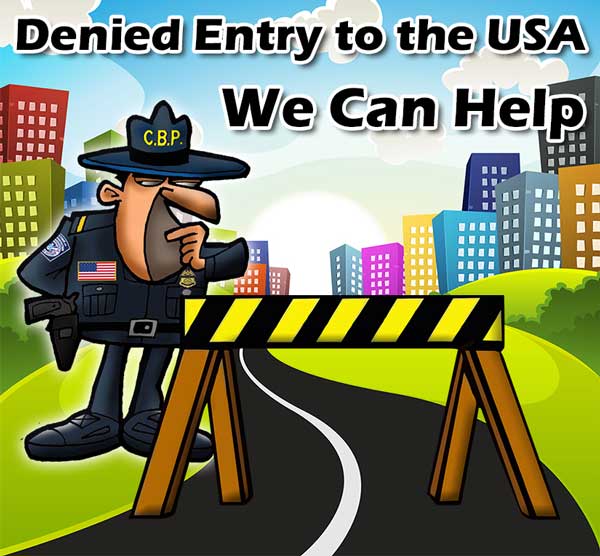
Denied entry to the USA from Canada Eh? We can help. While many Canadians stream across the United States border without problem, some find that they are stopped and refused entry because they are inadmissible to the United States. If they are going to be allowed to enter the United States they need an inadmissibility waiver. This waiver is often called an I-192 waiver because the grant of it is a waiver of the grounds of inadmissibility, and with an approved waiver you will be allowed to enter the United States.

Whether the temporary I-192 waiver or a permanent immigrant waiver is the right tool depends on the ground the record shows; our immigration waivers overview maps each ground to its waiver.
Denied Entry to the USA

Why You Need an Admissibility Waiver – Grounds of Inadmissibility

Before discussing this waiver for inadmissibility further, we go over why someone would need the waiver, why they are inadmissible, in the first place. The vast majority of inadmissible Canadians who cannot travel to the United States are inadmissible because of a criminal conviction. Examples of crimes that tend to cause the biggest problems are offenses related to drugs, and offenses that are considered crimes of moral turpitude. Examples of this latter category are theft offenses. Besides criminal convictions, a common reason that Canadians are refused entry to the USA is violations of US immigration law. Examples of this are misrepresentations to Customs and Border Protection (CBP) officers at the border while seeking entry to the United States. It is possible to combine both the criminal conviction and the misrepresentation together. If a CBP officer asks have you been convicted of any crimes, and you are aware of a conviction for a shoplifting offense 15 years ago, but denied that you have ever been convicted of any crimes, it is likely that the CBP officer will find the criminal conviction for shoplifting in the Canadian criminal database to which he or she has access. Such a discovery by the CBP officer will likely result in the Canadian being refused entry on two grounds, the criminal conviction itself, and making a misrepresentation about it.

Application for a Nonimmigrant Waiver of Inadmissibility

Canadians who have this inadmissibility problem can request a nonimmigrant waiver of inadmissibility on form I-192, application for advance permission to enter as a nonimmigrant. As you might expect, there’s a lot more to a waiver application than simply completing a form. You will need to get a certified record of conviction from the Royal Canadian Mounted Police. You will also need to prove that you’re a Canadian citizen or a landed immigrant. The documentary requirements of the waiver application itself are quite simple. Where it gets more difficult is in arguing your case under the appropriate legal standard for admission, grant of the waiver. While all waiver applications are submitted to CBP at either Ports of Entry (POE) or preclearance ports like those at major Canadian airports, Calgary and Toronto, the CBP office simply acts as a processing center to fingerprint the applicant and collect the appropriate fee. Once the CBP officer accepts the application it is sent to the Admissibility Review Office (ARO) for adjudication. A single office adjudicates all these nonimmigrant waiver requests so that they can be adjudicated to a uniform standard.

Legal Standard for Evaluating Waiver Applications

All applications for a nonimmigrant waiver to the United States are evaluated against a standard set forth by the Board of Immigration Appeals in 1978 in a case called Matter of Hranka. This case instructs that the ARO must evaluate an application by considering first, the risk of harm to society in the United States if the applicant was admitted. The second factor is the seriousness of the violation. Lastly, the applicant must have reasons for entering the United States. It is making a compelling case in this required legal argument that needs to accompany all waiver applications that can prove difficult, and where legal help matters most.

How Immigration Law of Montana Can Help You with a Waiver Application

Immigration Law of Montana has a lot of experience preparing waiver applications for Canadians who are inadmissible to the United States for both, criminal convictions and immigration violations. We can assist you through all the steps of inadmissibility waiver process, including preparing an application that will be accepted by CBP and counseling the applicant how to best represent the application when submitting it. Our legal arguments have found favor with the ARO and our clients have used the waiver of inadmissibility to successfully enter the United States. Please contact us if you would like our assistance with an admissibility waiver to enter the United States.
Footer

Our Location

We are located about 20 minutes NE of Billings in a rural community:

Immigration Law of Montana, P.C.
8400 Clark Rd
Shepherd, MT 59079
406-373-9828

Affiliations

Montana State Bar

AILA Member


Social

  • Facebook
  • LinkedIn
  • Tumblr
  • Twitter
  • YouTube
  • Immigration Lawyer Montana
  • Privacy Policy
  • Disclaimer
  • Terms of Service
  • Site Map
  • Contact Us

COPYRIGHT © 2026 Immigration Law of Montana · All Rights Reserved

  • EnglishEnglish
  • EspañolEspañol